
Moving Beyond Retrograde Menstruation: An Integrated, Evidence-Based Approach to Yoga, the Microbiome, and Endometriosis Management

In my clinical practice specialising in women's health and fertility, I believe in providing truly comprehensive support. This means blending the diagnostic brilliance of Traditional Chinese Medicine (TCM) with Yoga, a deep biomedical background, naturopathy, sound therapy, and breathwork.
I recently read an article by Geeta S Iyengar regarding the yogic approach to endometriosis. While her specific physical instructions for practising and shaping the body hold great therapeutic merit, her underlying anatomical theories are firmly out of date.
As modern clinicians and somatic educators, we can look at her sequence as a brilliant tool for clearing what TCM calls Blood Stasis (pelvic congestion) and downregulating the nervous system, but we must offer an updated biomedical and immunological perspective.
Endometriosis is no longer considered a localised plumbing issue of the pelvis caused by retrograde menstruation (menstrual blood flowing backwards through the fallopian tubes). Rather, contemporary biomedical science recognises it as a systemic, chronic, inflammatory and immune-mediated disease (Cheng, 2026; Wu et al., 2022), with endometrial lesions evading the standard immune surveillance and debris clearance.
When we shift our understanding of why this disease happens, our movement and yoga practices must evolve accordingly. Here is how modern research and time-tested Eastern medicine reshape how we step onto the mat.
Bio-Individuality: Trusting the Body Over Rigid Rules
Traditional yoga protocols often treat every menstruating body as identical, imposing strict rules about what a woman can and cannot do. In contrast, TCM and functional medicine assess the individual's current state of vital energy, or Qi. While patterns are often more complex, we can think about two primary presentations:
The Depleted State (Deficiency): If a student is exhausted, running on empty, and experiencing deep, dull pelvic aching, their Zheng Qi (upright, defensive energy) is compromised. This student genuinely needs deep, restorative rest, Pranayama (breathwork), and soothing somatic therapy to regenerate.
The Excess State (Qi and Blood Stasis): If a student is experiencing sharp, stabbing pains, severe bloating, and emotional frustration, their Qi and Blood are bound up. Rigidly forcing them to stay completely still actually worsens the stagnation. They require mindful, gentle movement to invigorate circulation and break up the stasis.
As teachers, it is impossible to know a student’s internal landscape on any given day. The ultimate authority is the student’s intrinsic bodily intuition. If a gentle inversion or a standing pose feels stabilising and relieving to a student during her cycle, her nervous system is signalling safety. We must empower women to trust their bodies over dogmatic rules (Gonçalves et al., 2016).
The Gut-Pelvic Axis: Visceral Rolling and Abdominal Engagement
Older protocols frequently demanded that women with endometriosis eliminate abdominal work and visceral massage tools (like the yoga roll in Forrest Yoga) from their practice. The fear was that it would irritate the pelvic organs or aggravate retrograde flow. Modern research completely flips this concept on its head by exposing the direct correlation between endometriosis lesions and the gut microbiota (Cheng, 2026).
This connection is highly dependent on the estrobolome, a specific collection of gut bacteria capable of metabolising and modulating the body's circulating oestrogen (Alghetaa et al., 2023). When the gut microbiome is in a state of dysbiosis (imbalance), it produces excess beta-glucuronidase. This enzyme uncouples bound oestrogen destined for elimination, recycling it right back into the bloodstream and driving the systemic oestrogen dominance that feeds endometriosis lesions.
It is also incredibly common for women, not just those with endometriosis, to experience slow, sluggish bowel motility, sometimes only passing a movement every few days (Czerniak, 2026). Because bowel movements are the primary exit route for spent hormones and inflammatory waste products, completely avoiding the core is counterproductive. Research has shown that mindful abdominal work increases local blood flow, breaks up pelvic adhesions, mechanically stirs sluggish bowels, and directly assists the body in processing systemic inflammation (Wójcik et al., 2025 and Muñoz-Gómez et al., 2023)
The Integrated Practice: 5 Postures for Endometriosis Management
To evolve our sequencing, we must actively target the gut-pelvis axis, the estrobolome (the gut bacteria that metabolise estrogen), and the vagus nerve. The following selections combine classical restorative postures with highly targeted, therapeutic movements from the Forrest Yoga lineage to address the deep fascial, vascular, and energetic roots of endometriosis.
1. Forrest Yoga: Lying Over the Roll (Passive Abdominal Release)
The Setup: The student rolls a yoga mat or a large towel into a tight, firm "snail roll." Lying prone, they place the roll horizontally across the lower abdomen, just below the navel in the soft space of the pelvis (above the pubic bone). They rest on their forearms or lower their chest completely to the floor, letting the neck relax.
The TCM Lens: This posture applies direct, therapeutic pressure to the Ren Mai (Conception Vessel) and the lower Jiao (the pelvic metabolic burner). It directly stimulates the lower points of the Spleen, Liver, and Kidney channels, softening hard abdominal knots (Zheng Jia or abdominal masses) by physically driving Qi into areas of chronic energetic armouring
The Biomedical Lens: This is a profound form of passive visceral manipulation. Endometriosis creates dense micro-adhesions that glue the bladder, uterus, and bowels together, restricting natural motility. Breathing deeply against the resistance of the roll provides an internal tissue massage, breaks up fascial restrictions, mechanically stimulates a sluggish colon to assist the estrobolome in eliminating bound estrogens, and directly releases a chronically tight psoas muscle (Clara Roberts-Oss, 2026).
2. Forret Yoga Twisted Root Abdominals (with Active Exhalations)
The Setup: Lying on the back, the student crosses the right thigh tightly over the left thigh (like sitting in a chair with legs crossed), optionally wrapping the right foot behind the left calf. Hands are clasped behind the head. On an exhale, they lift the elbows toward the ceiling, curl the head and shoulders up, lift the tailbone slightly, and actively pull the low belly down toward the spine.
The TCM Lens: This pose combines a deep twist with core activation to violently shake up Qi and Blood Stasis in the lower abdomen. By compressing and then releasing the groin and pelvic regions, it acts as an energetic flush for the Liver and Spleen channels, which govern the smooth flow of blood during menstruation.
The Biomedical Lens: Traditional yoga tells endo students to avoid all core work, but a completely flaccid, guarded abdomen slows down gut motility, worsening the constipation that traps inflammatory estrogen in the body (Czerniak, 2026). Twisted Root builds deep internal heat (tapas) and increases local arterial perfusion. The mechanical compression of the deep pelvic floor and abdominal wall forces a high-volume flush of oxygenated blood into the pelvic cavity upon release, counteracting tissue hypoxemia, the lack of oxygen that causes excruciating endo cramps.
3. Supported Malasana (Yogi Squat on Blocks)
The Setup: The student places one, two, or even three blocks beneath their seat, ensuring that the pelvis is fully supported and the muscular walls of the legs and pelvic floor can completely relax while in the deep squatting shape.
The TCM Lens: This position opens the ancestral gateways of the pelvic floor, directing Re (pathological inflammatory Heat) and stagnant, downward-rushing Qi safely out of the lower abdomen. It widens the hip joints, encouraging a smooth, unobstructed flow of Xue into the uterine vessels.
The Biomedical Lens: Chronic pelvic pain causes a protective, hypertonic (chronically contracted) pelvic floor. If a student holds a traditional squat, they reinforce this tension. By fully propping the pelvis, we trigger the stretch reflex to turn off. Combined with diaphragmatic breathing, the pelvic floor is allowed to eccentrically lengthen on the inhale and gently contract on the exhale, acting as a hydraulic pump to drain stagnant lymph and venous blood away from inflamed pelvic lesions.
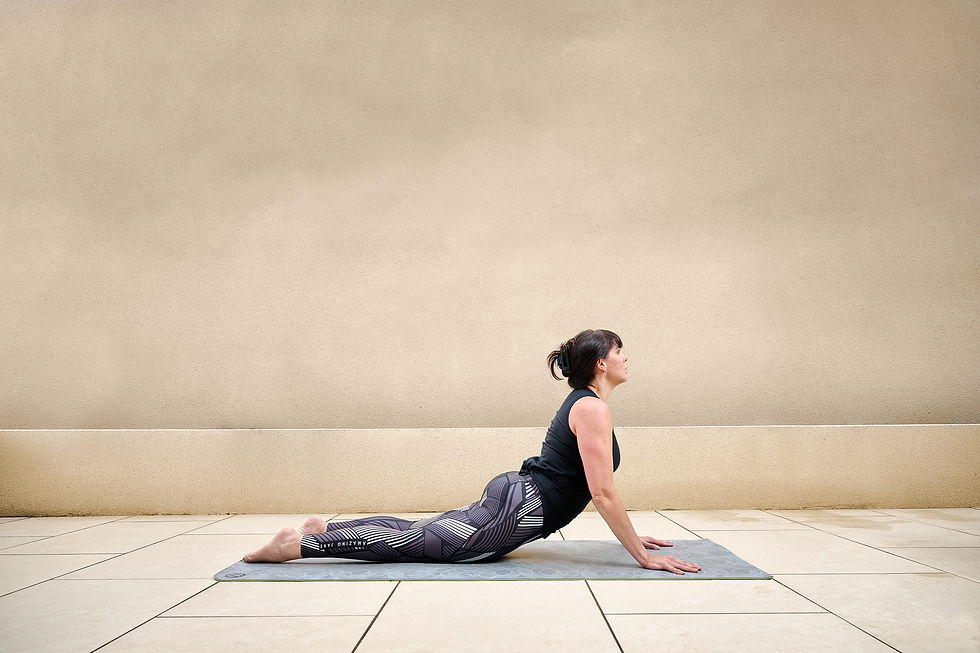
Laura in seal pose.
4. Sphinx Pose into Passive Seal (Gentle Anterior Extension)
The Setup: Lying prone, elbows are placed under the shoulders, pulling the chest forward smoothly while keeping the glutes and lower abdomen completely soft. If the body signals space, they can walk the hands forward, straighten the arms into Seal, ensuring the lower belly remains passively draped on the mat or a blanket.
The TCM Lens: This shape creates a spacious stretch across the entire anterior matrix of the torso, specifically targeting the Stomach and Spleen channels. In TCM, the Spleen is responsible for "holding organs in place" and transforming Fluids; stretching this line helps clear damp, stagnant accumulations in the pelvic basin.
The Biomedical Lens: Endometriosis often pulls the uterus into a fixed, rigid state (often retroverted due to posterior adhesions). Sphinx and Seal gently decompress the anterior pelvic fascia and stretch the broad ligament. It applies a mild, therapeutic load to the ventral vagus nerve pathway, stimulating the parasympathetic nervous system without triggering a guarding response in the abdominal wall.
5. Viparita Karani (Legs-Up-The-Wall Pose with Vagal Sound Resonances)
The Setup: The pelvis is elevated on a folded blanket or bolster, with the legs resting vertically up a wall. The arms rest open at the sides. While holding this shape, the student is guided to perform prolonged, low-frequency humming (Bhramari Pranayama or sound therapy) on the exhalation.
The TCM Lens: This is a premium restorative tonic for Kidney Yin and Kidney Qi, the root energetic reservoirs of reproductive health. It uses gravity to easily drain heavy, damp, stagnant Blood out of the congested lower Jiao, sending it back to the Heart and Upper Jiao to be oxygenated and renewed.
The Biomedical Lens: This shape shifts the body's hemodynamics instantly. Gravity pulls venous blood and lymphatic congestion down out of the pelvic cavity, dropping intra-pelvic pressure and bringing rapid relief to throbbing, hypoxic nerve endings. By combining this pose with Bhramari Pranayama or sound therapy, we increase vagal tone. Every time the vagus nerve fires, it releases acetylcholine. This neurotransmitter tells the immune system to stop overproducing the inflammatory cytokines (TNF-alpha and IL-6) that cause excruciating menstrual cramps and create an inhospitable environment within the uterus.
Pranayama and Breathwork
Pranayama is not merely a relaxation tool; in an integrated therapeutic setting, it functions as a targeted neuroimmunological intervention. Women living with chronic pelvic pain frequently experience shallow chest breathing and hypertonic (chronically tight) pelvic floor guarding.
In TCM, the Lungs govern the Qi of the entire body and serve as the motor that moves Xue (Blood). Endometriosis lesions present pathologically as a severe manifestation of Blood Stasis.
When a student practices deep, slow diaphragmatic breathing (Dirga Pranayama), the excursion of the diaphragm acts as a mechanical pump. During inhalation, the downward descent of the diaphragm increases intra-abdominal pressure, gently massaging the liver and intestines to stimulate intestinal peristalsis, assisting the sluggish gut in excreting bound oestrogens.
Simultaneously, the pelvic floor naturally drops and relaxes on the inhale, and lifts on the exhale. This rhythmic pressure gradient behaves like a hydraulic pump, draining stagnant, un-oxygenated blood and lymph out of the lesser pelvis, minimising the hypoxia that triggers acute endometrial cramping.
Vagal Neuro-Immunomodulation
Biomedically, endometriosis is characterised by significant sympatho-vagal imbalance. What this means is that endometriosis keeps the nervous system locked in a chronic fight or flight state, making it incredibly difficult for the body to switch into its natural rest and digest mode. This, in turn, reduces vagal tone (Zeng et al., 2025). This sustained sympathetic state triggers the release of pro-inflammatory cytokines, such as interleukin 6 (IL 6) and tumour necrosis factor alpha (TNF alpha), which cause lesions to flare, proliferate, and establish localised nerve endings (Estevao, 2022; Örün et al., 2021).
By practising slow Pranayama with an extended exhalation, such as a 4-7-8 pacing or Bhramari (Humming Bee Breath), we directly maximise respiratory sinus arrhythmia (RSA), a phenomenon mediated almost exclusively by parasympathetic cardiac vagal activity (Bouairi et al., 2004; Hayano & Yasuma, 2003). This rapid upregulation of the vagus nerve triggers the cholinergic anti-inflammatory pathway. Vagal activation inhibits macrophage activation and sharply downregulates the production of systemic pro-inflammatory cytokines (Estevao, 2022).
Qualitative clinical trials confirm that women integrating these precise pranayama techniques demonstrate significantly improved autonomy over pelvic pain management and reduced reliance on pharmaceutical interventions (Gonçalves et al., 2016).
Immunomodulation: The Synergy of Diet and Somatic Practice
Endometriosis thrives in an environment of immune system dysregulation (Sisnett, 2026). Ectopic lesions survive because the body's natural cellular cleanup crew fails to clear them, while pro-inflammatory cytokines cycle endlessly through the pelvis.
We cannot exercise or meditate our way out of a poor diet, nor can we use nutrition to fix a severely dysregulated nervous system. True healing requires an integrated approach. Pairing an anti-inflammatory diet (high fibre, low AGEs, and warm, cooked TCM damp clearing foods) lowers systemic inflammatory markers like TNF alpha and IL-6 while starving pathobionts in the gut (Czerniak, 2026).
When combined with regular yoga and breathwork, which downregulates the sympathetic nervous system and lowers circulating cortisol, we actively modulate the immune response, reduce pelvic muscle guarding, and aid in downregulating lesion activity (Örün et al., 2021). By keeping the pelvic floor and abdomen dynamic, we create an internal landscape where the body can actively manage and potentially halt the progression of endometriosis.
Complementary Modalities
To build a truly robust, holistic treatment strategy, yoga, pranayama, and diet can be augmented with other highly effective, research-backed modalities rooted in Eastern medicine and neurobiology.
Acupuncture and Electroacupuncture
Acupuncture has a substantial body of evidence validating its use for endometriosis-related visceral pelvic pain and dysmenorrhoea. Systematic reviews and meta-analyses demonstrate that acupuncture significantly reduces pain severity, improves response rates, and decreases serum CA 125 levels (a clinical marker of pelvic inflammation) (Chen et al., 2024; Xu et al., 2017).
Biomedically, acupuncture works by activating endogenous descending pain inhibitory systems, increasing pain thresholds, and modulating abnormal levels of prostaglandins and beta endorphins (Chen et al., 2024; Lund & Lundeberg, 2016). Furthermore, research suggests that targeted acupuncture can suppress serum oestradiol levels, thereby inhibiting the oestrogen-dependent growth of ectopic endometrium (Xu et al., 2017).
Chinese Herbal Medicine (CHM)
In TCM, endometriosis is recognised as a condition of Zheng Jia (abdominal masses) driven by Blood Stasis and Qi stagnation (Wang et al., 2021). Clinically, practitioners produce herbal formulas bespoke to the individual case, but research has shown classic herbal formulations, such as Gui Zhi Fu Ling Wan, function via specific molecular pathways to exert acesodyne (pain-relieving), anti-inflammatory, and hemodynamic-improving actions (Wang et al., 2021). Clinical trials have demonstrated that CHM can be as effective as conventional hormonal therapies in relieving endometriosis-related pain and reducing lesion sizes, but with significantly fewer adverse side effects (Flower et al., 2007).
Sound Therapy and Vagal Regulation
While clinical trials specifically isolating sound therapy for endometriosis tissue regression are still emerging, its foundation in psychoneuroimmunology is profound. Endometriosis is a systemic condition that alters gene expression in the brain, leading to central pain sensitisation, anxiety, and mood disorders (Wu et al., 2022).
Sound therapy utilising specific vibrational frequencies, singing bowls, or acoustic pacing acts as a non-invasive tool for vagal nerve stimulation. By slowing down the respiratory rate and increasing heart rate variability (HRV), sound therapy downregulates the sympathetic fight or flight response. This somatic shift reduces systemic cortisol, interrupts central pain sensitisation pathways, and lowers the pro-inflammatory cytokine profile that fuels pelvic pain (Estevao, 2022; Nie et al., 2026).
In Summary: A New Paradigm for Endometriosis Care
Ultimately, we must move away from rigid, one-size-fits-all protocols and learn to approach our students as distinct individuals. True therapeutic success relies on assessing their unique physical and energetic state on that exact day, balancing whether they require deep, restorative nourishment or active circulation to break up pelvic stagnation.
By marrying the precise diagnostic tools of Traditional Chinese Medicine with modern biomedical science, we open the door to a much richer, multidimensional toolkit. We should not fear the moving body; instead, we must confidently integrate the structural benefits of targeted abdominal work, deep visceral rolling, clinical nutrition, and soothing vocal or sound therapies alongside acupuncture and Chinese herbal medicine.
Every single lineage and style of yoga holds profound therapeutic merit. There is no dangerous posture or forbidden movement; there is only the right practice, for the right individual, at the right time. When we empower our students to tune into their own bodily intuition and support them with every holistic modality available, we shift our role from dogmatic instructors to true facilitators of systemic healing.
References
Alghetaa, H., Mohammed, A., Singh, N. P., Bloomquist, R. F., Chatzistamou, I., Nagarkatti, M., & Nagarkatti, P. (2023). Estrobolome dysregulation is associated with altered immunometabolism in a mouse model of endometriosis. Frontiers in Endocrinology, 14. https://doi.org/10.3389/fendo.2023.1261781
Bouairi, E., Yasuma, F., & Hayano, J. (2004). Respiratory sinus arrhythmia in freely moving and anaesthetised rats. Journal of Applied Physiology, 97(1), 21-27. https://doi.org/10.1152/japplphysiol.00277.2004
Chen, C., Li, X., Lu, S., Yang, J., & Liu, Y. (2024). Acupuncture for clinical improvement of endometriosis-related pain: a systematic review and meta-analysis. Archives of Gynaecology and Obstetrics, 310, 2101-2114. https://doi.org/10.1007/s00404-024-07675-z
Cheng, W. (2026). Gut microbiota dysbiosis in endometriosis: mechanistic insights and gut microbiota-targeted therapeutic strategies. Frontiers in Microbiology, 17. https://www.frontiersin.org/journals/microbiology/articles/10.3389/fmicb.2026.1776574/full
Czerniak, J. (2026). Dietary Fiber in Endometriosis: Mechanisms, Evidence, and Potential Clinical Benefits—Up-to-Date Review. Nutrients, 18(4), 690. https://www.mdpi.com/2072-6643/18/4/690
Wójcik, M., Kampioni, M., Hudáková, Z., Siatkowski, I., Kędzia, W., & Jarząbek-Bielecka, G. (2025). The Effect of Osteopathic Visceral Manipulation on Quality of Life and Postural Stability in Women with Endometriosis and Women with Pelvic Organ Prolapse: A Non-Controlled Before–After Clinical Study. Journal of Clinical Medicine, 14(3), 767. https://doi.org/10.3390/jcm14030767
Muñoz-Gómez, E., Alcaraz-Martínez, A. M., Mollà-Casanova, S., Sempere-Rubio, N., Aguilar-Rodríguez, M., Serra-Añó, P., & Inglés, M. (2023). Effectiveness of a Manual Therapy Protocol in Women with Pelvic Pain Due to Endometriosis: A Randomized Clinical Trial. Journal of Clinical Medicine, 12(9), 3310. https://doi.org/10.3390/jcm12093310
Estevao, C. (2022). The role of yoga in inflammatory markers. Brain, Behavior, & Immunity - Health, 20, 100421. https://doi.org/10.1016/j.bbih.2022.100421
Flower, A., Liu, J. P., Chen, S., Lewith, G., & Little, P. (2007). Chinese herbal medicine for endometriosis. The Cochrane Database of Systematic Reviews, (3). https://doi.org/10.1002/14651858.cd006568
Gonçalves, A. V., Makuch, M. Y., Setubal, M. S., Barros, N. F., & Bahamondes, L. (2016). A qualitative study on the practice of yoga for women with pain-associated endometriosis. The Journal of Alternative and Complementary Medicine, 22(12), 977-982. https://doi.org/10.1089/acm.2016.0021
Hayano, J., & Yasuma, F. (2003). Hypothesis: Respiratory sinus arrhythmia is an intrinsic resting function of the cardiopulmonary system. Cardiovascular Research, 58(1), 1-9. https://doi.org/10.1016/s0008-6363(02)00851-9
Lund, I., & Lundeberg, T. (2016). Is acupuncture effective in the treatment of pain in endometriosis? Journal of Pain Research, 9, 157. https://doi.org/10.2147/jpr.s55580
Nie, J., Yi, Y., Liu, X., Koninckx, P. R., & Guo, S. W. (2026). A pilot study on the use of transcutaneous auricular vagus nerve stimulation to relieve dysmenorrhea in patients with adenomyosis and endometriosis. Reproduction and Fertility, [Ahead of print]. https://doi.org/10.1530/RAF-26-0052
Örün, D., Karaca, S., & Arıkan, Ş. (2021). The effect of breathing exercise on stress hormones. Cyprus Journal of Medical Sciences, 6(1), 22-27. https://doi.org/10.4274/cjms.2021.2020.2390
Sisnett, D. J. (2026). Immune dysregulation in endometriosis: the T cell perspective. Journal of Reproductive Immunology, [Advance Online Publication].
Wang, X., Shi, Y., Xu, L., Wang, Z., Wang, Y., Shi, W., & Ma, K. (2021). Traditional Chinese medicine prescription Guizhi Fuling Pills in the treatment of endometriosis. International Journal of Medical Sciences, 18(11), 2401-2408. https://doi.org/10.7150/ijms.55789
Wu, Y., Liu, Y., Jia, H., Luo, C., & Chen, H. (2022). Treatment of endometriosis with dienogest in combination with traditional Chinese medicine: A systematic review and meta-analysis. Frontiers in Surgery, 9. https://doi.org/10.3389/fsurg.2022.992490/full
Xu, Y., Zhao, W., Li, T., Zhao, Y., Bu, H., & Song, S. (2017). Effects of acupuncture for the treatment of endometriosis-related pain: A systematic review and meta-analysis. PLOS ONE, 12(10), e0186616. https://doi.org/10.1371/journal.pone.0186616
Zeng, W., Liu, X., & Guo, S. W. (2025). Reduced vagal tone in women with adenomyosis and endometriosis: therapeutic implications. Reproduction and Fertility, 6(4). https://doi.org/10.1530/RAF-25-0039


Comments